
Kid's Factory | School In The Air
Laveno Mombello | Italy |
2018 |
35000.00sqm
Concept design
Competition
Educational Housing Public Buildings
Credits | Karen Berberyan | Armen Hakobyan |
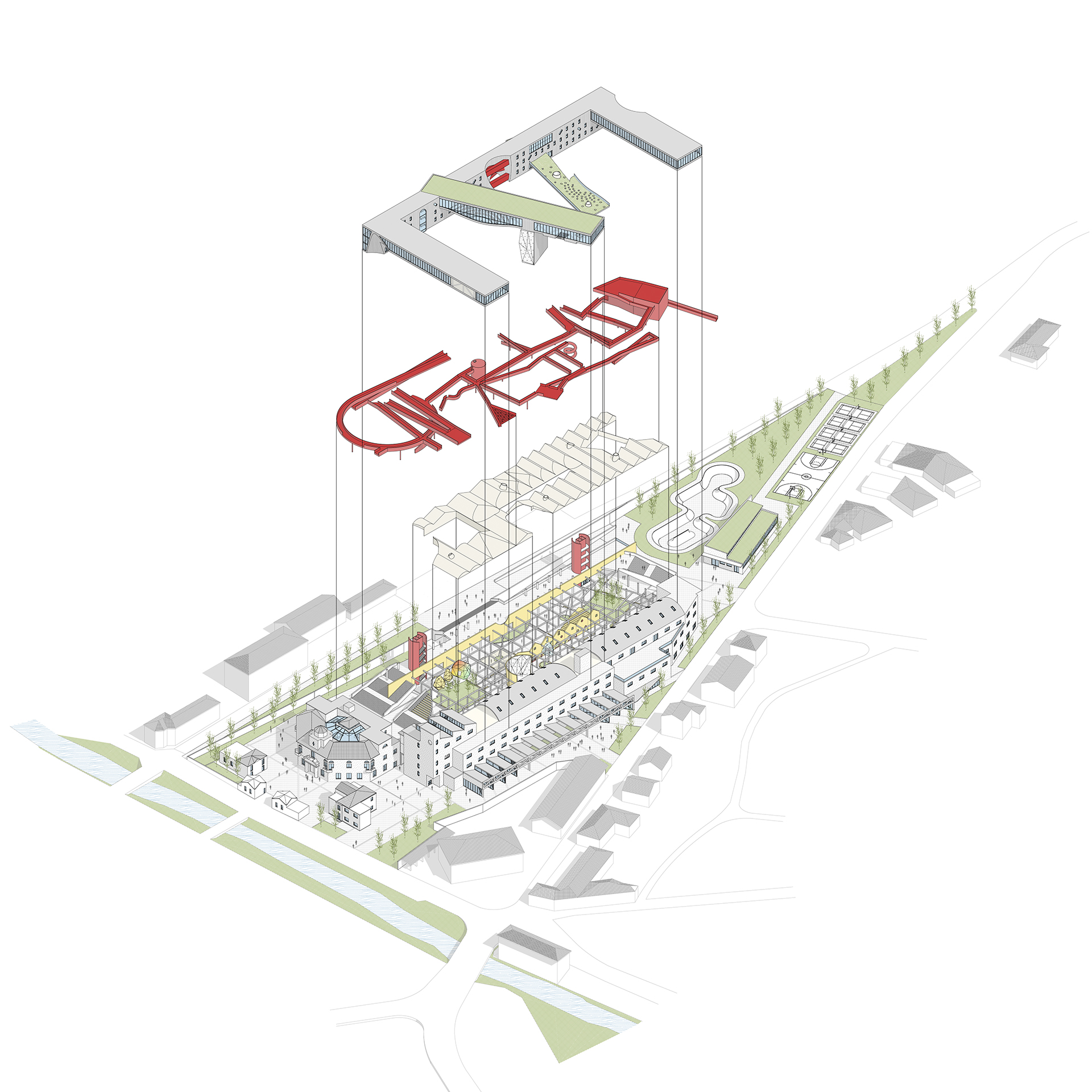
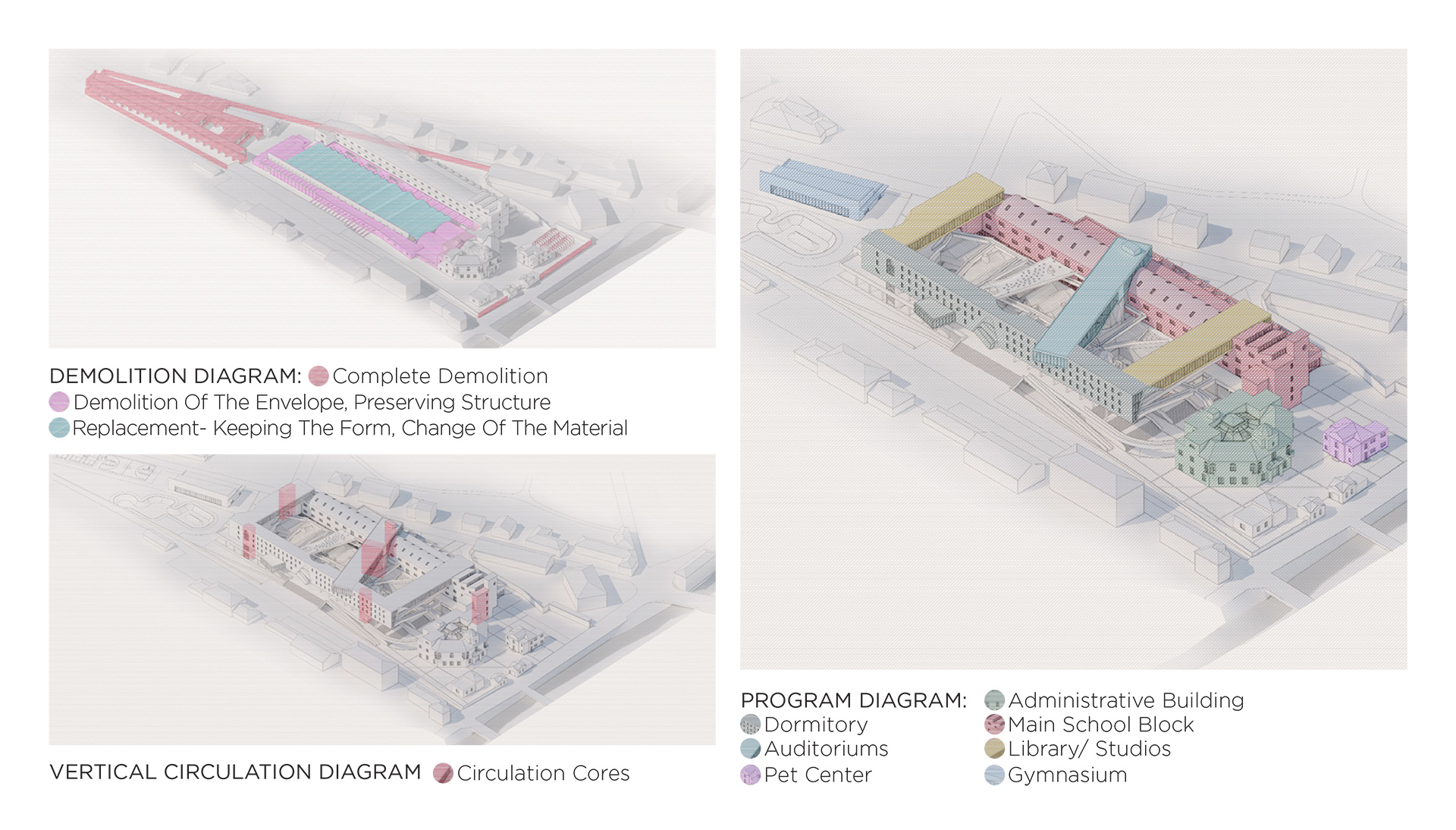
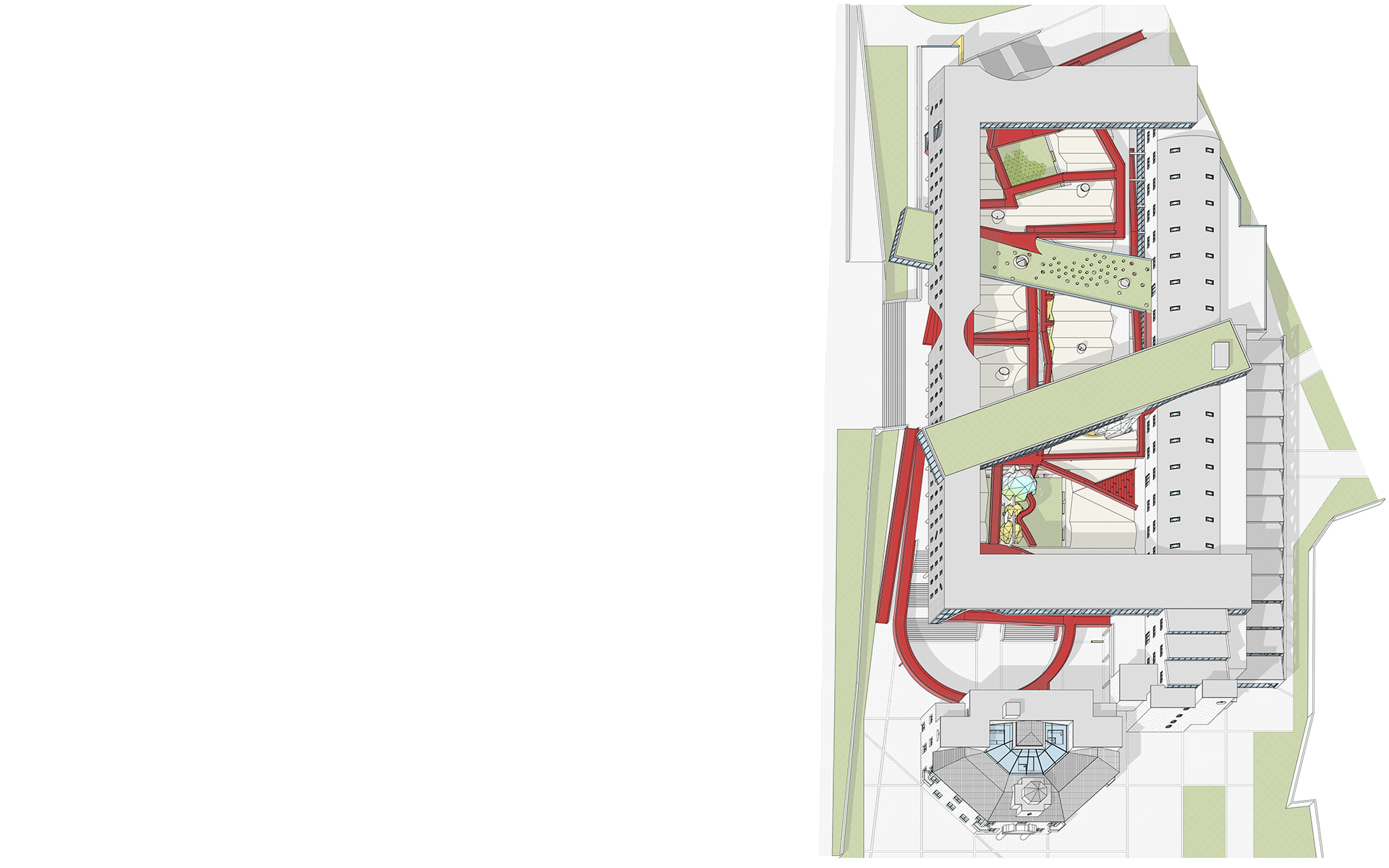
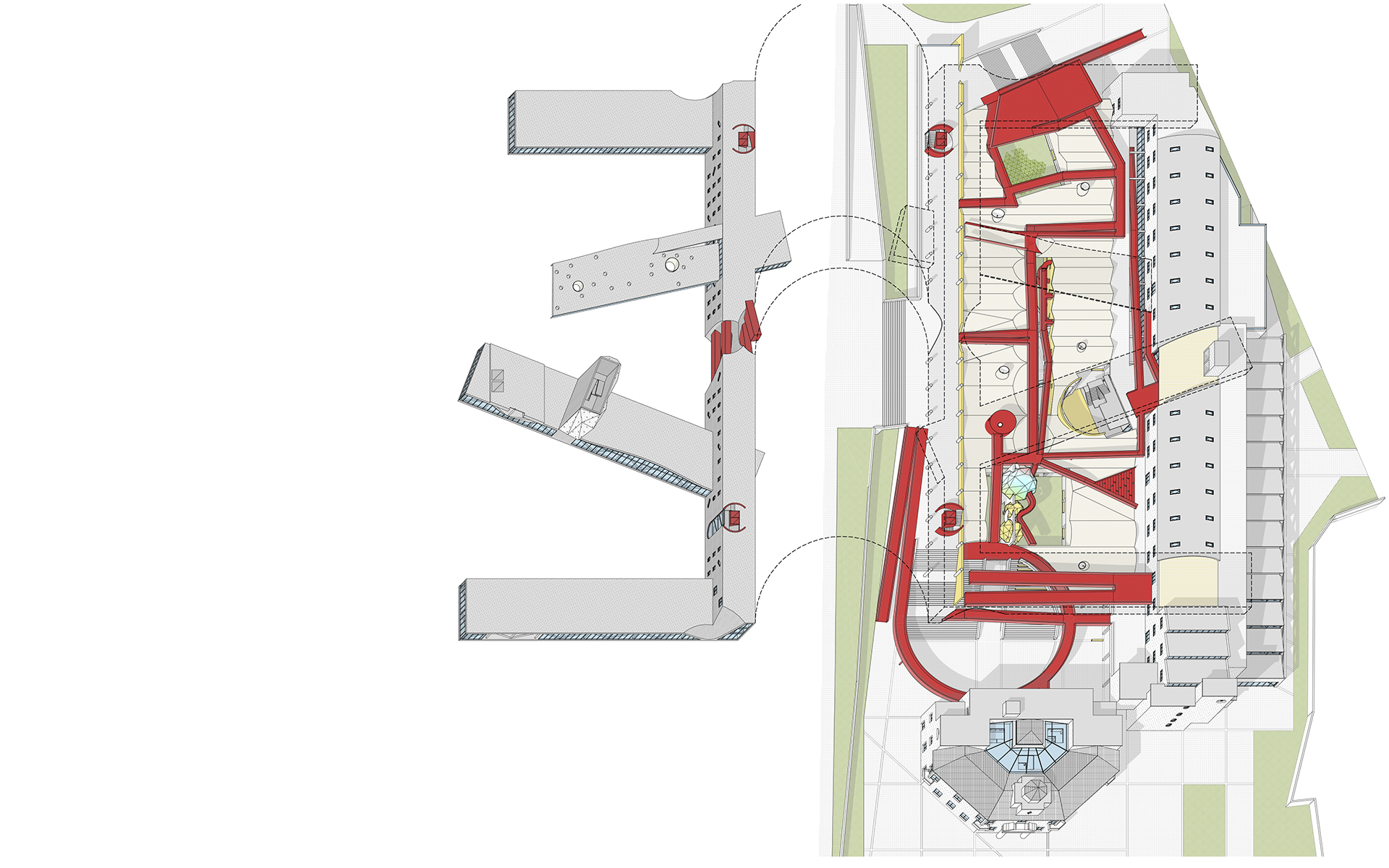
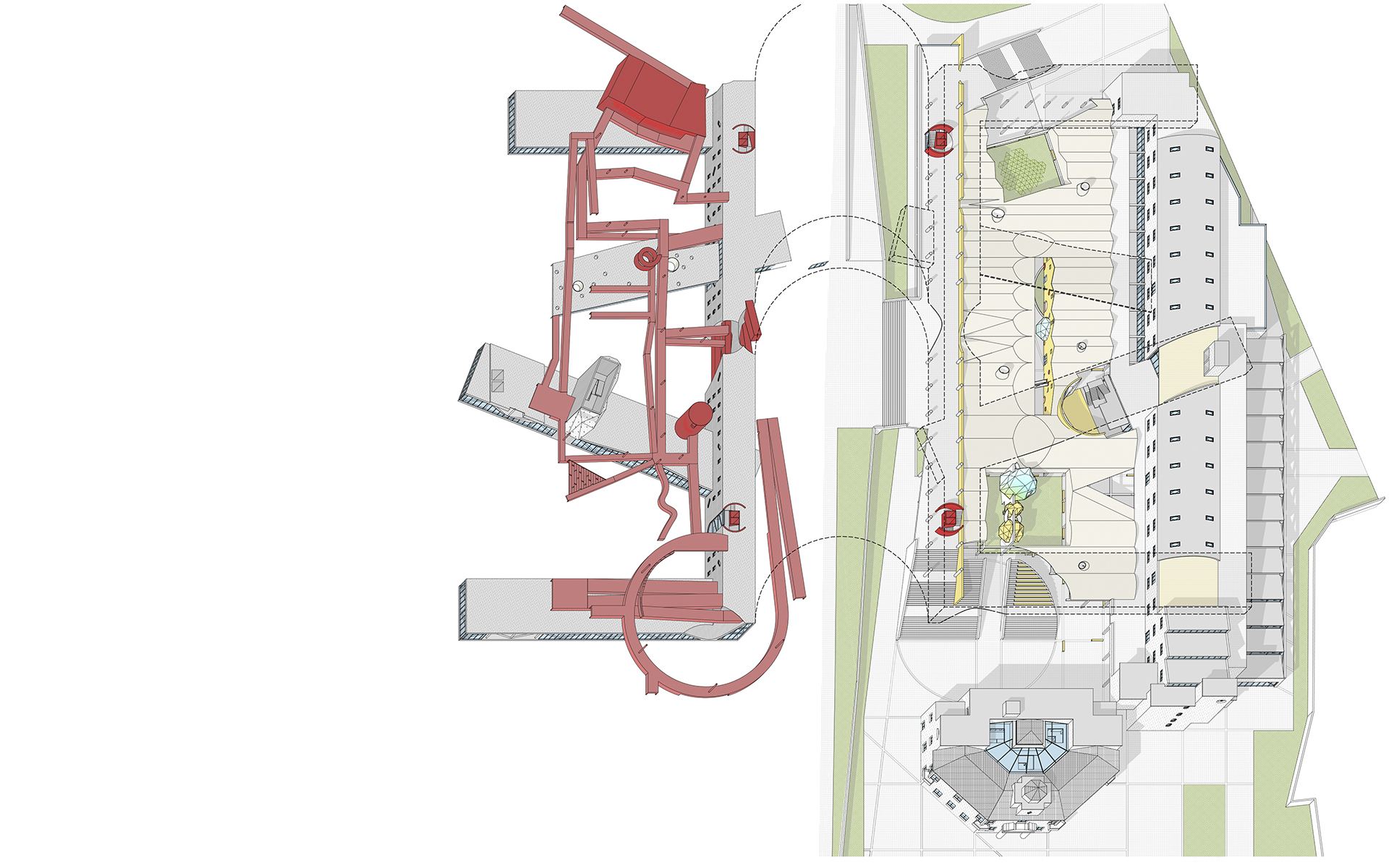
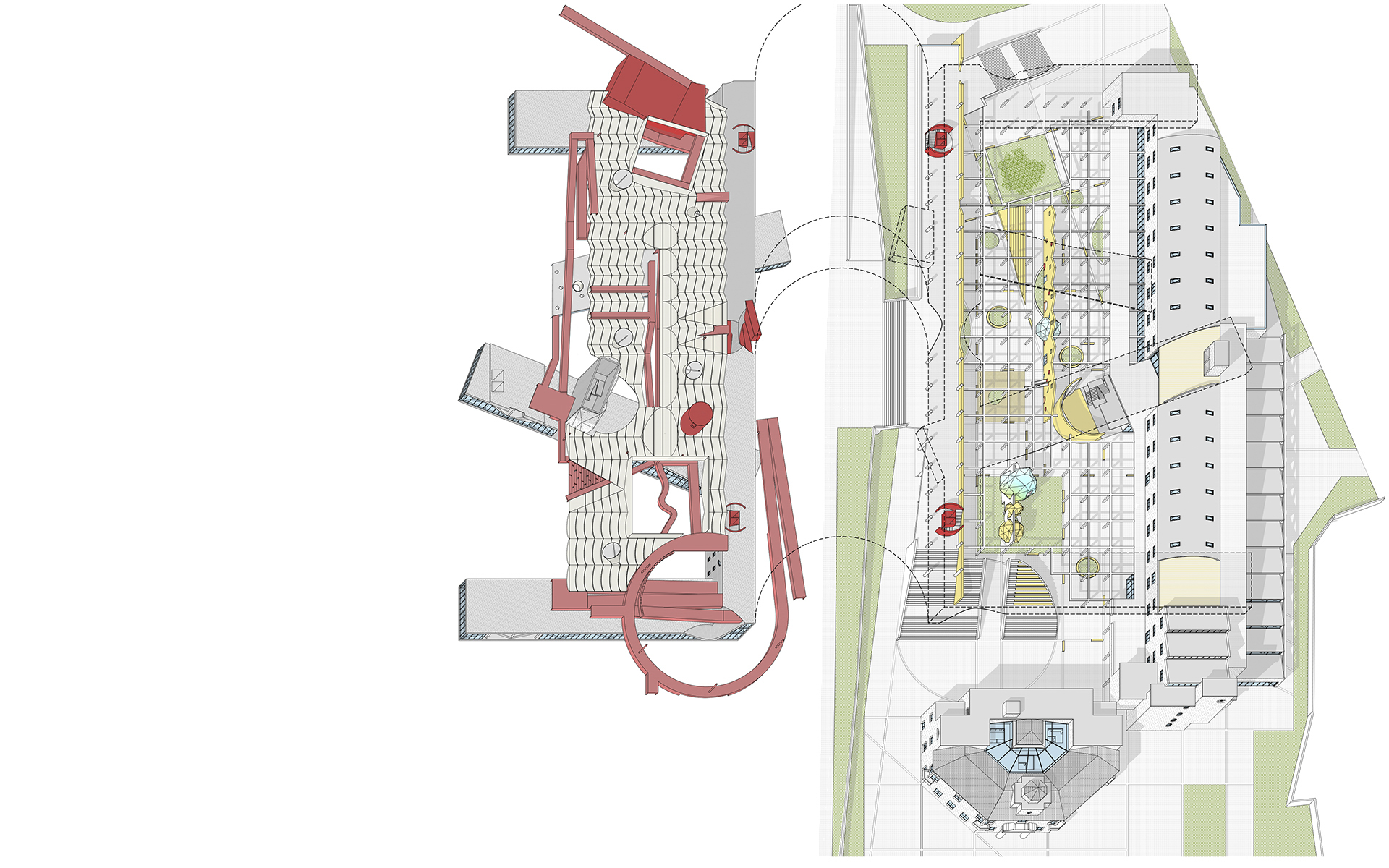
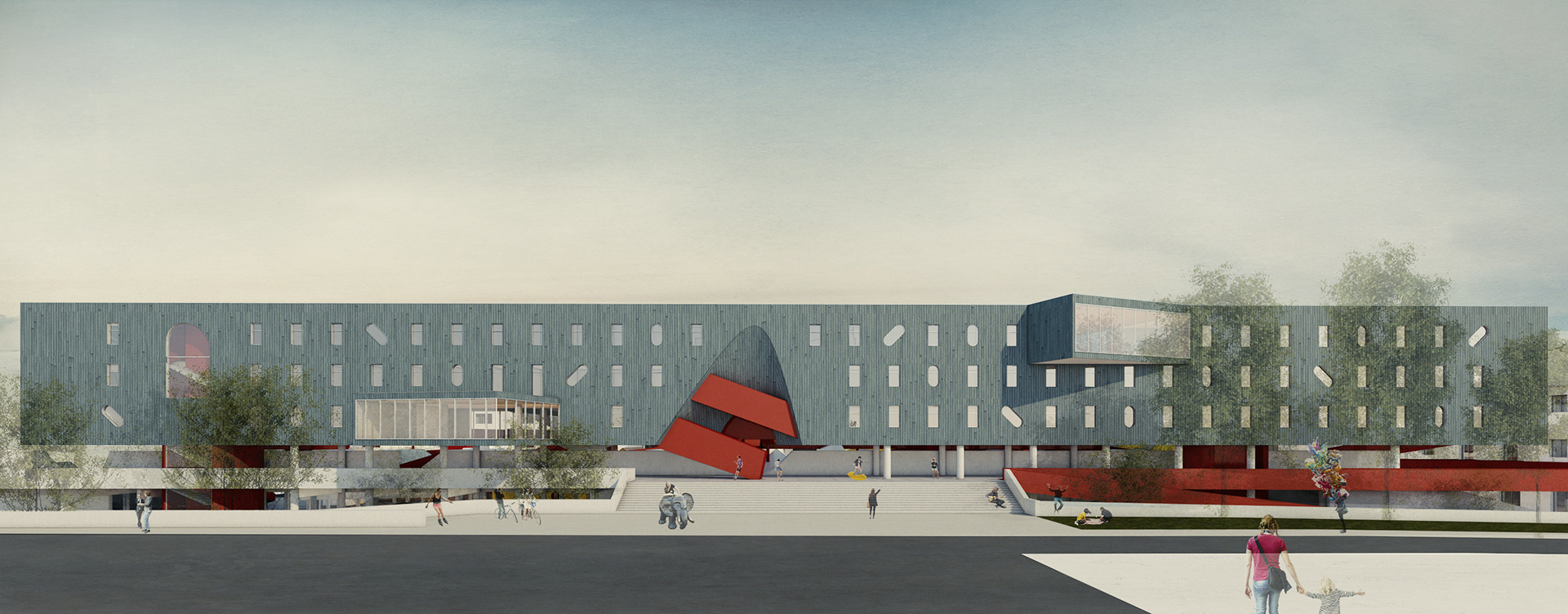
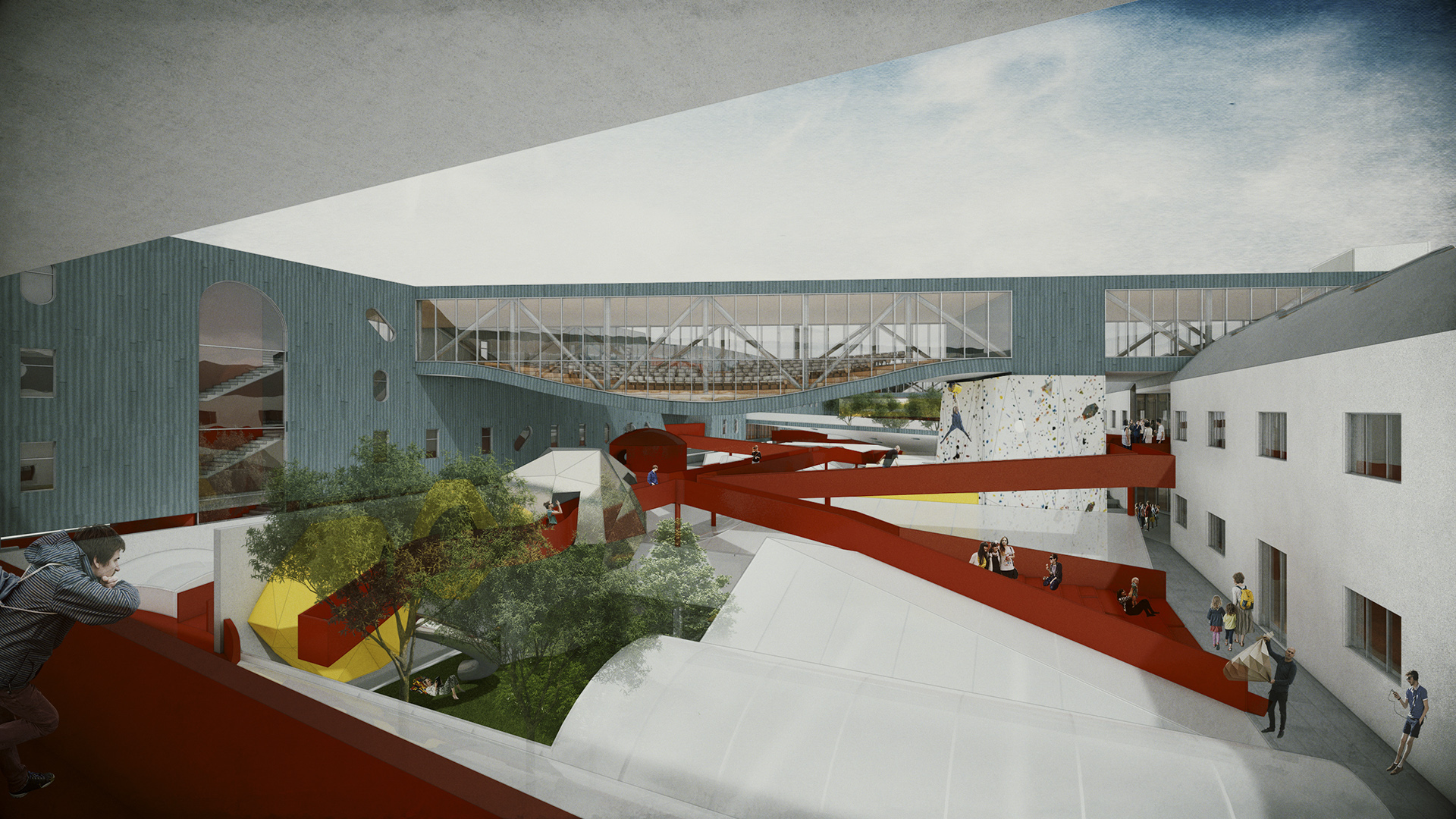
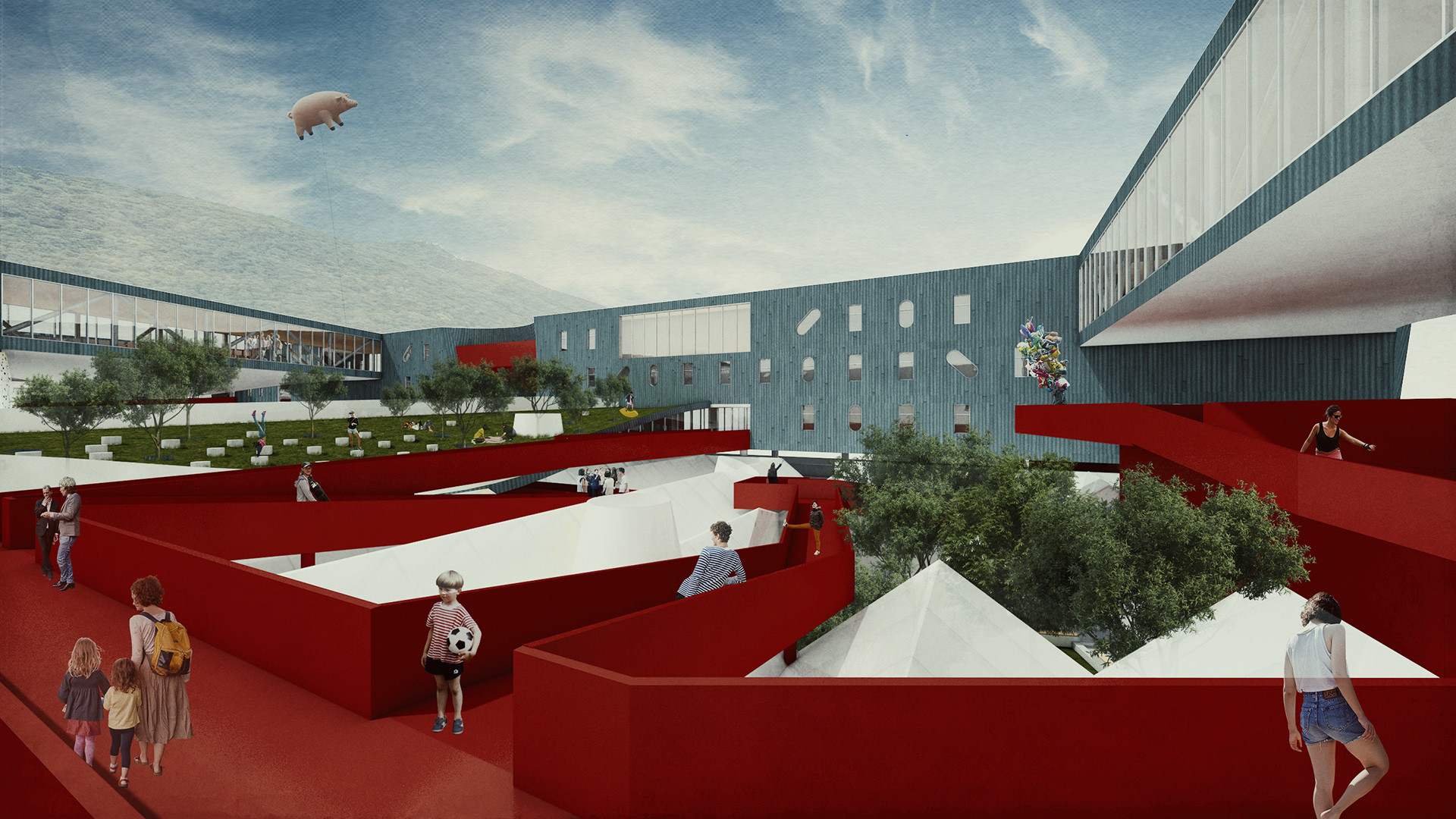
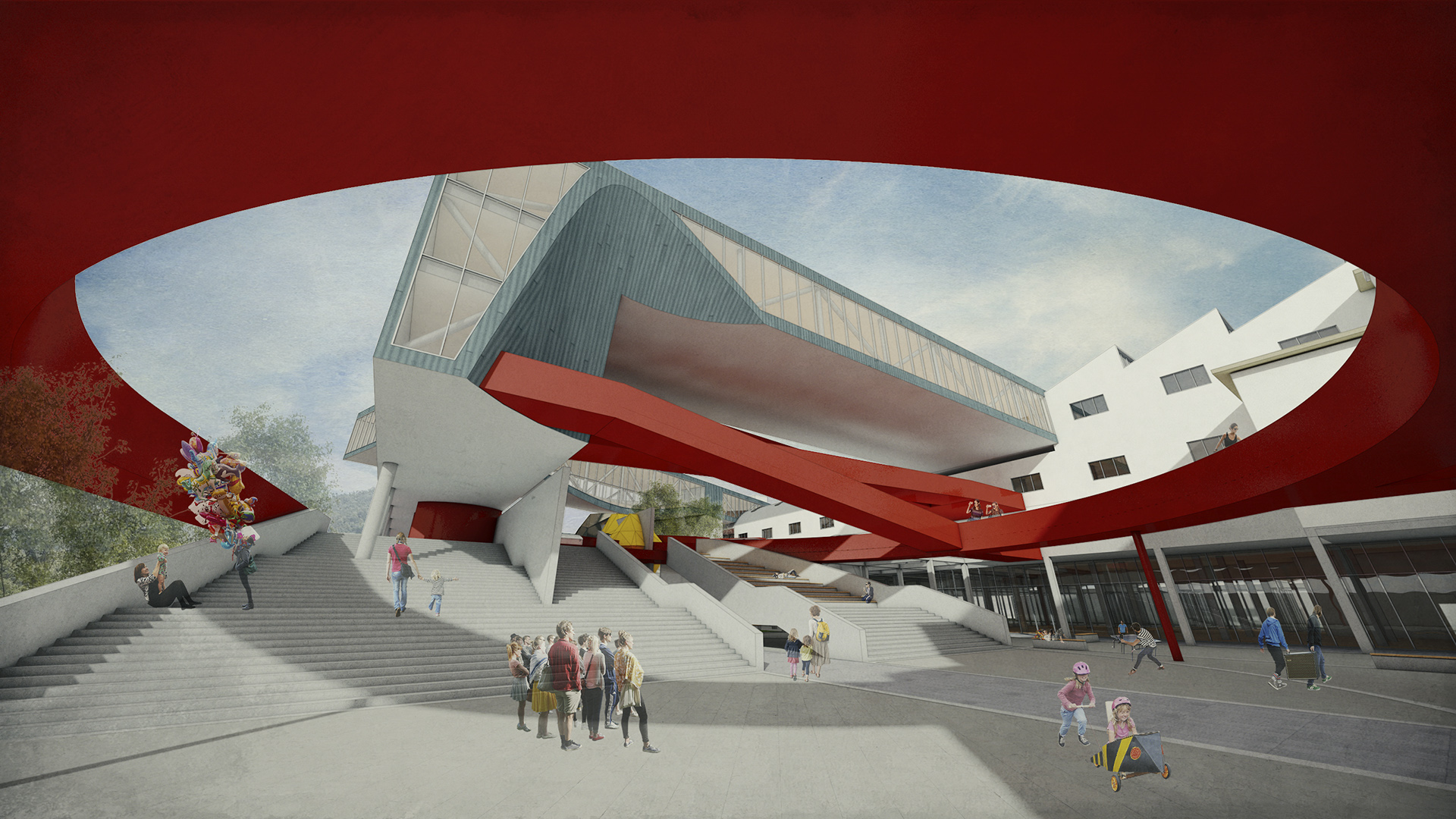
Competition Entry Taking the competition title as a departure point, Kid’s Factory interprets as a gift to the children of today of an old treasure that once belonged to their ancestors as an important industrial facility. The factory is reincarnated as a fun-filled, gentle and welcoming place that helps children explore and find their individual strengths and identity. For those that recall the confining brick walls and the ultimate liberation in Pink Floyd’s The Wall, this proposal aspires to create an environment with no obstruction to vision, imagination, and creativity. The program of the competition is further augmented by adding sufficient functionality to house an international alternative school as an influential educational platform in the region. The school offers otherwise unavailable opportunities and emphasizes creativity and gratification through fulfillment. It provides age-appropriate tools and advanced didactic methodology to teach animation, web design, music and arts including pottery making, robotics, filmmaking, and other courses, allowing each child to thrive in their own way and chart their path towards productive citizenship. The newly added volumes of 5000 m2 are organized to complement and take advantage of, the existing structure. The dormitory unit is parallel to the existing 3-story complex, to become the main education building. Programs for larger groups like auditoria, library, classrooms, and studios, are roughly perpendicular to the school and dorm volumes, and connect them at the upper levels. This move frees the ground level, and the central area converts into the school’s courtyard – the main common space of the complex. As the pottery objects require multiple layers in the final product, this central park space, using the existing structural frame, is organized by different programs vertically stacked upon each other. The ground level is the main common area, a playground where most of the active time is spent. A light polycarbonate roof layer, which repeats the rhythm of the existing undulating tile roof, provides protection to the ground level from weather and seals the space for exhibitions and events. The upper layer consists of multiple ramps and movement bridges that act as circulation and connect all areas of the complex. These ramps by themselves also house different programs and activities from small sitting areas and playrooms to a 200-seat auditorium. The structures of the composition are organized around the inner courtyard, which is intentionally disordered and busy with its various activities, materials, programs, symbolizing the plasticity of clay and the diversity of the final product - pottery. The disorganized courtyard, however, is surrounded and guarded by rationally placed and well-organized volumes that, in their turn, epitomize the notions of responsibility, rules, and hard work – the rigid qualities of pottery. The design of the new addition is influenced by the program of the old factory and by the antagonism between the plasticity of raw clay and the unyielding rigidity of pottery. This addition receives plastic intrinsic forces that mutate the building in its various parts. These forces memorialize the history of the site and give the building its own identity of an oversized, carefully handcrafted object. The preserved concept of the existing building and undulated roof produces new expression when materialized differently. A clear polycarbonate material, used to mimic the form of the existing heavy roof, provides a new quality of light, new views, and translucent visibility of the above and bottom levels with their activities. It also offers the additional benefits of spatial integration and elimination of the boundary between the old and the new. Ceramic finish for the new addition is also considered, ideally handmade by local craftspersons.